Site speed optimization service refers to professional assistance in improving how quickly your website loads and responds to user interactions. Here's what you need to know:
Did you know that 40% of visitors will abandon your website if it takes longer than 3 seconds to load? In today's digital world, your website's speed isn't just a technical metric—it's directly tied to your bottom line.
A slow website creates frustrated users, diminished brand perception, and lost revenue opportunities. With Google officially using page speed as a ranking factor, slow sites also face decreased visibility in search results, compounding the problem further.
The data is clear: a 0.1 second improvement in site speed can increase conversion rates by 8%, while mobile sites that load in 5 seconds see 70% longer average session times compared to sites that take 19 seconds to load.
I'm Tony Herman, founder of Webstix with over 30 years of experience providing site speed optimization services that transform sluggish websites into lightning-fast revenue generators for businesses across all industries.
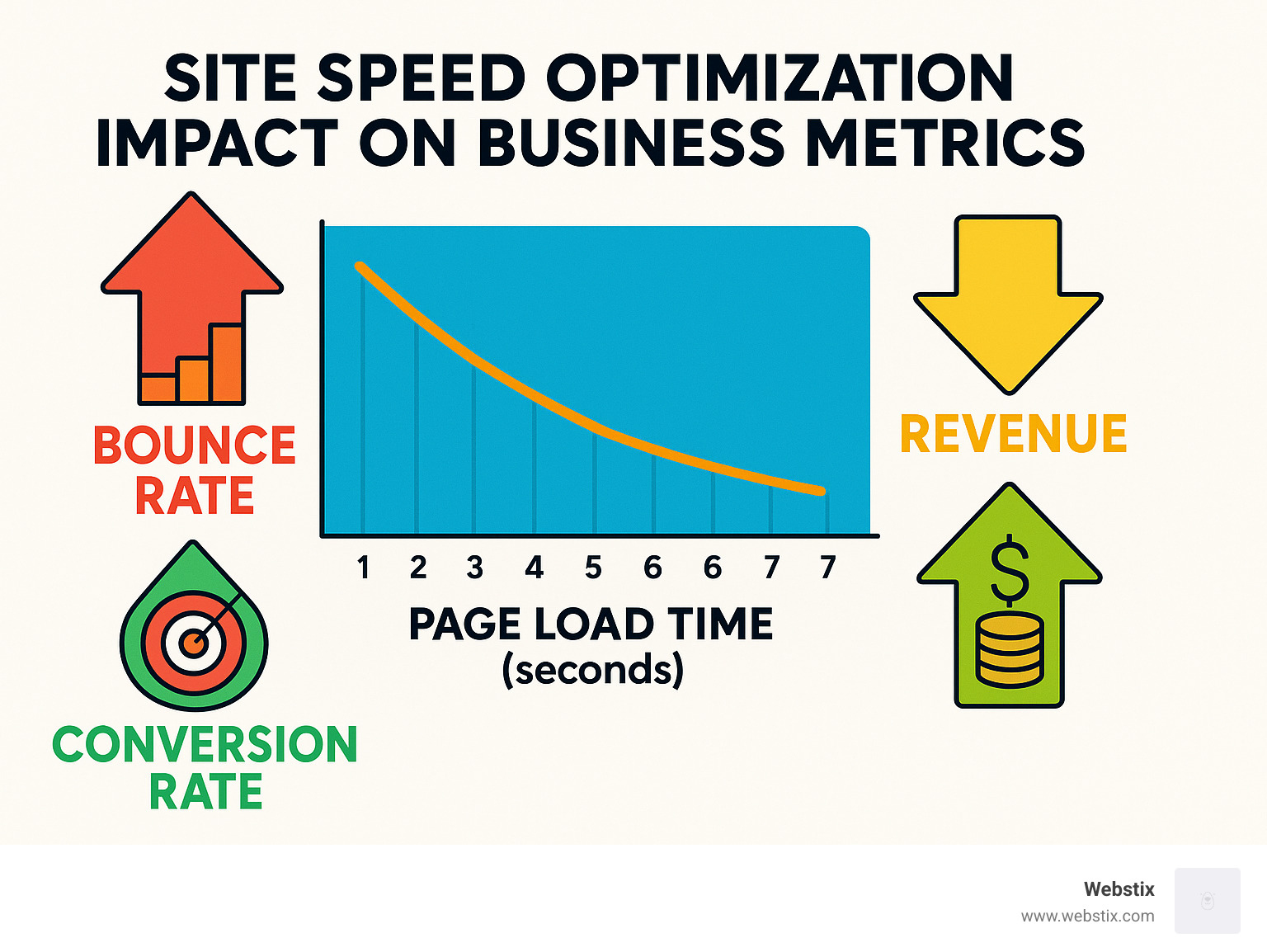
When it comes to your website, speed isn't just a nice-to-have feature—it's a critical business asset that directly impacts your revenue, customer satisfaction, and visibility online. Let's look at why investing in speed should be a top priority for your business.
Have you ever abandoned a website because it took too long to load? You're not alone. The relationship between site speed and your bottom line is remarkably direct.
Even tiny improvements make a big difference. A mere 0.1 second improvement in page load time can boost conversion rates by 8.4% for mobile sites. That's the difference between a visitor becoming a customer or clicking away to a competitor.
Most users expect websites to load in 3 seconds or less—yet more than half of visitors will abandon your site and switch to a competitor if loading takes longer than that critical 3-second threshold.
At Webstix, when we implement a site speed optimization service for our clients, we consistently see immediate improvements in sales metrics and customer engagement. These aren't abstract statistics—they represent real revenue that businesses either capture or lose based on how quickly their pages load.
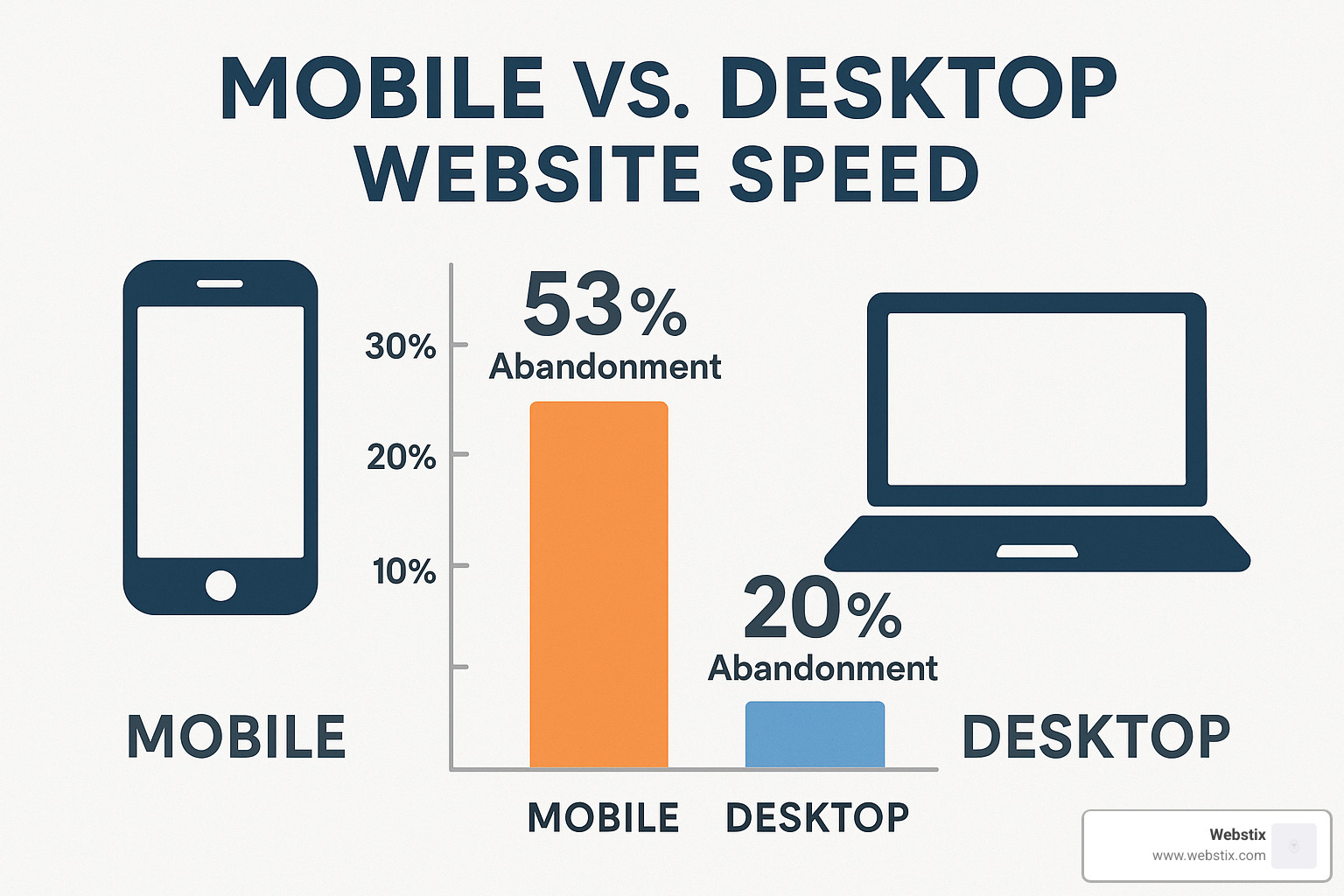
The mobile speed challenge is even more urgent. Mobile sites still lag significantly behind desktop, loading at an average of 7.9 seconds compared to 2.9 seconds on desktop—that's 2.6 times slower!
This gap is particularly concerning because mobile users are even less patient:
When your customers are on the go, every second—or even millisecond—counts more than ever.
Since Google's Speed Update in 2018, page speed has become an official ranking factor, particularly for mobile searches. This emphasis on speed was further reinforced with the introduction of Core Web Vitals in 2020 as part of Google's Page Experience update.
A faster website improves your SEO in multiple ways:
Better rankings come naturally to faster sites, especially in mobile search results. Google wants to send users to sites that provide a good experience, and speed is a fundamental part of that experience.
Your site also enjoys improved crawl efficiency, allowing search engines to index more of your content in less time. Plus, faster sites typically show better engagement metrics like longer dwell time and reduced bounce rates—both indirect signals that help your rankings.
When we implement a site speed optimization service at Webstix, we're not just fixing today's speed issues—we're preparing your site for future algorithm updates and ensuring you maintain competitive visibility as Google continues to prioritize performance.
When we talk about website speed, we're not just looking at a simple stopwatch reading. Think of it more like a health checkup with multiple vital signs that give us the full picture of your site's performance.
At Webstix, we look at several key metrics that together tell us how your visitors actually experience your website:
Time to First Byte (TTFB) measures how quickly your server springs into action when someone requests your page. Ideally, this should be under 200ms – about the time it takes to blink.
Largest Contentful Paint (LCP) tracks when your main content becomes visible. It's like waiting for the curtain to rise at a show – visitors want this to happen within 2.5 seconds.
First Input Delay (FID) is all about responsiveness. When someone clicks a button, how quickly does your site react? Under 100ms feels instantaneous to users.
Cumulative Layout Shift (CLS) measures how much your page elements jump around as they load. Nothing frustrates users more than trying to click something that suddenly moves! We aim for under 0.1 here.
Other important metrics include Speed Index (visual loading speed), Time to Interactive (when users can actually use your page), and Total Blocking Time (periods when your page is frozen).
Different speed testing tools are like different mechanics – each has their specialty:
| Tool | Type of Data | Best For | Key Metrics |
|---|---|---|---|
| PageSpeed Insights | Lab + Field | Overall assessment | Core Web Vitals, opportunities |
| GTmetrix | Lab | Detailed waterfall analysis | Fully loaded time, page size, requests |
| WebPageTest | Lab | Advanced scenarios | Connection speed simulation, multi-location |
| Chrome UX Report | Field | Real-user data | Core Web Vitals across your site |
| Lighthouse | Lab | Developer guidance | Performance score, opportunities |
When we provide a site speed optimization service at Webstix, we don't just rely on lab data that simulates visitors. We examine real-world data from your actual users, because that's what truly matters for your business.
Google's Core Web Vitals deserve special attention because they're not just technical metrics – they directly impact your search rankings and user experience.
Think of Largest Contentful Paint (LCP) as first impressions – it measures how quickly your main content appears. Just like in real life, you want to make a good impression fast (under 2.5 seconds).
First Input Delay (FID) is like customer service response time – when someone interacts with your site, how quickly do you respond? Keeping this under 100ms makes interactions feel natural and immediate.
Cumulative Layout Shift (CLS) is about reliability and stability. Imagine reading a physical newspaper where the articles keep rearranging themselves – frustrating, right? A good CLS score (under 0.1) means your content stays put where users expect it.
Google uses a simple traffic light system to categorize performance:
A professional site speed optimization service focuses on getting all three Core Web Vitals glowing green. This isn't just about pleasing Google – it's about creating the smooth, responsive experience your visitors deserve.
For an in-depth understanding of these vital metrics, you can explore scientific research on Core Web Vitals or check out the official documentation on PageSpeed Insights.
Ever wonder what happens behind the scenes when you hire experts to speed up your website? At Webstix, our site speed optimization service isn't just about quick fixes—it's a comprehensive process designed to transform your sluggish site into a high-performance machine that delights visitors and boosts your bottom line.
We start by getting to know your website inside and out. Think of it as a complete physical for your digital presence:
We'll run comprehensive speed tests across different devices and locations (because your site should be fast for everyone, everywhere). We dig deep to find those hidden bottlenecks that are slowing things down—maybe it's server response times, bulky code, or those gorgeous but massive images you love. We'll also take a peek at what your competitors are doing, so we can make sure you're not just fast—you're faster than them.
This detective work gives us the full picture of your site's current health and helps us create a custom plan that addresses your specific needs, not just generic recommendations.
Here's where the magic happens. Based on what we find in the audit, we roll up our sleeves and get to work:
We'll fine-tune your server settings to respond faster, implement modern protocols like HTTP/2, and optimize that crucial Time To First Byte. Your website will get a smart caching strategy so returning visitors experience lightning-fast load times. We'll trim the fat from your code by minifying HTML, CSS, and JavaScript files—removing unnecessary characters without affecting functionality.
Those beautiful images that were slowing things down? We'll compress them, implement lazy loading so they only appear when needed, and possibly convert them to next-gen formats for better performance. If you have global visitors, we'll set up a Content Delivery Network (CDN) to serve content from locations closer to your users.
We'll also clean up your database, optimize those resource-hungry queries, and take a hard look at third-party scripts that might be creating drag on your site's performance.
Your website is built on a specific platform, and each has its own quirks and opportunities:
For WordPress sites, we'll configure advanced caching plugins, optimize the database, and possibly implement Redis or Memcached for object caching. WooCommerce stores get special attention to product pages, cart, and checkout processes—where speed directly impacts sales. If you're on Shopify, we'll optimize your theme, audit your apps (those can be real performance killers!), and fine-tune your Liquid code. And for custom CMS solutions, we'll create custom optimizations based on your unique architecture.
We don't just make changes and hope for the best. Every optimization is thoroughly tested:
We check your site on different browsers and devices to ensure everything works as expected. We run before/after speed comparisons so you can see exactly how much faster your site has become. Most importantly, we verify that all your site's features still work perfectly—because speed means nothing if functionality suffers. And we make sure your Core Web Vitals move into the "good" range, giving you that Google-friendly green status.
When you partner with Webstix for site speed optimization service, here's what to expect:
The journey begins with an initial consultation (1-2 days) where we discuss your goals and expectations. Next comes our comprehensive audit (2-3 days), where we analyze your site and develop a custom optimization plan. The implementation phase (3-7 days) happens on a staging environment so your live site continues to function normally. We then conduct thorough testing (1-2 days) before deploying to your live site during low-traffic hours (1 day). Finally, we provide a detailed report (1 day) documenting all improvements.
From start to finish, the process typically takes 7-14 days, depending on your site's complexity. You'll receive a comprehensive initial audit, detailed implementation plan, before/after performance metrics, documentation of all changes, recommendations for ongoing maintenance, and optional training for your team.
Finding the right partner for your speed optimization needs is crucial. Look for providers with proven experience across various platforms and a transparent approach to their work. The best providers (like us!) offer guarantees on performance improvements and have specific expertise with your website platform.
Consider whether you'll need ongoing support after the initial optimization, and always check reviews from previous clients. Understanding the pricing structure is important too—make sure you know exactly what's included in the service.
At Webstix, we believe in complete transparency, deep expertise, and measurable results. Our site speed optimization service comes with a guarantee of improvement, and we provide detailed reporting so you can see the exact value you're getting. After all, we're not just speeding up websites—we're helping businesses thrive online.
More info about Website Maintenance Services
When it comes to site speed optimization services, there's no magic bullet that works for everyone. Your website's unique platform, complexity, and traffic patterns all determine what kind of optimization package will deliver the best results. Let me walk you through what's typically available:
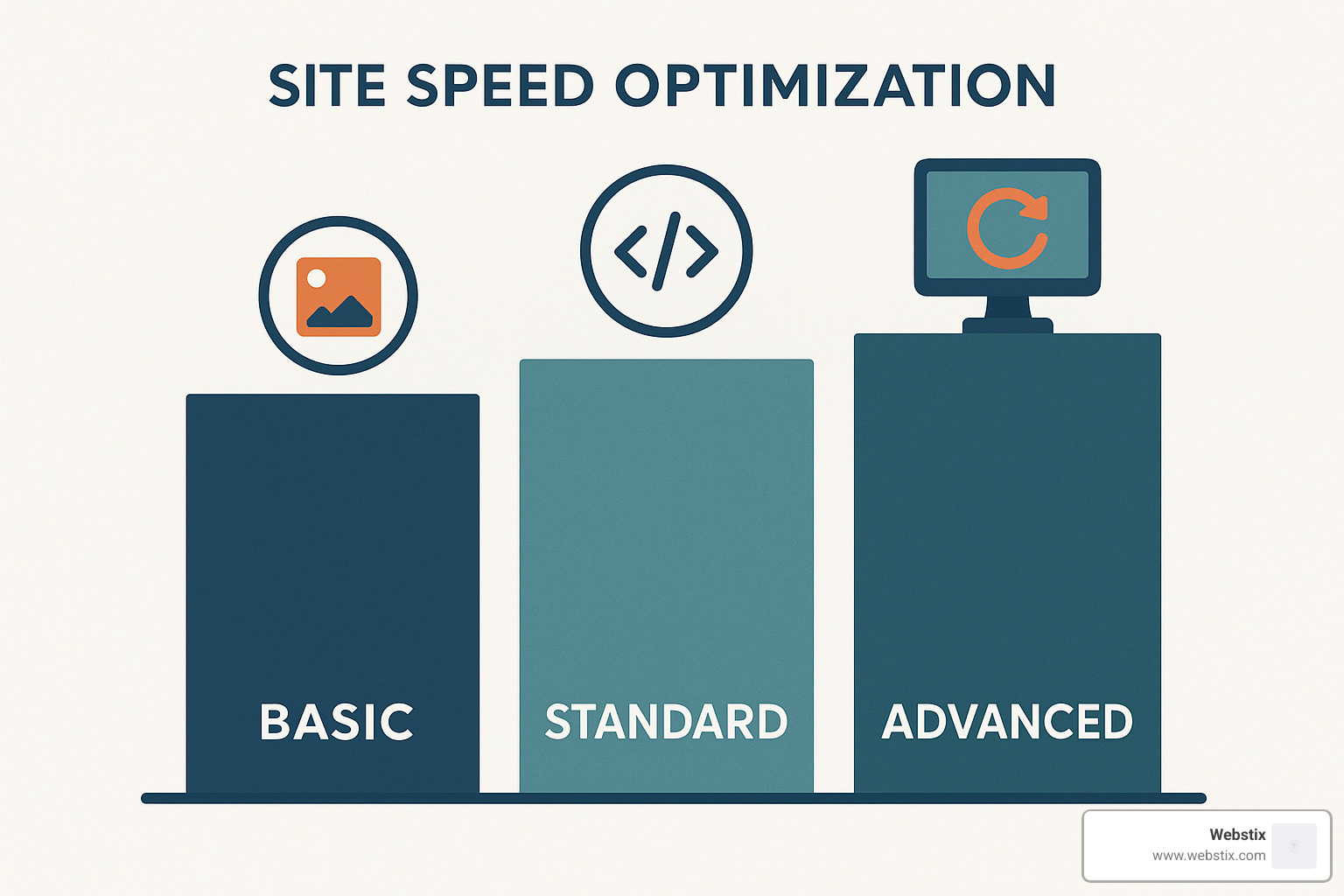
Most providers offer an entry-level package in the $500-$1,000 range. This typically covers the fundamentals: basic image compression, simple caching setup, minor code clean-up, standard CDN configuration, and a basic performance report when the work is done.
This level works well if you have a small brochure-style website with modest traffic, or if you're just dipping your toes into the speed optimization waters. Think of it as the tune-up rather than the complete engine overhaul.
The mid-tier option usually falls between $1,000-$2,500 and represents the sweet spot for most business websites. Here you'll get more comprehensive improvements: advanced image optimization with lazy loading techniques, a thorough caching strategy customized to your site, complete code minification, sophisticated CDN setup with performance rules, database cleaning and optimization, management of third-party scripts, and detailed before/after reporting to showcase your improvements.
This is our most popular package at Webstix because it delivers substantial performance gains for most business websites and smaller e-commerce operations. You'll definitely feel the difference with this level of optimization.
For larger, complex websites with serious performance needs, advanced packages start around $2,500 and can go up depending on complexity. These comprehensive solutions include architectural overhauls, server-level optimizations, sophisticated multi-layered caching systems, critical CSS implementation, resource prioritization, HTTP/2 and Brotli compression setup, full Core Web Vitals optimization, ongoing monitoring, and custom performance solutions custom to your specific situation.
This level makes sense for high-traffic sites, large e-commerce operations, or websites with complex functionality where even small performance gains translate to significant business impact.
With WordPress powering over a third of all websites, we've developed specialized optimization techniques for this popular platform. The challenge with WordPress is that its flexibility can lead to bloat if not carefully managed.
A proper WordPress site speed optimization service addresses server environment settings (optimizing PHP and MySQL), cleans up the database by removing unnecessary data, audits plugins to eliminate redundancies, implements multi-layered caching, optimizes images with modern compression techniques, minifies code, integrates CDN delivery, fine-tunes the theme, and applies advanced techniques like Critical CSS generation.
For WooCommerce stores, we take additional steps to optimize product pages, streamline the checkout process, implement AJAX for smoother interactions, develop specific strategies for product image handling, and optimize inventory systems.
At Webstix, our WordPress specialists have seen even heavily-loaded sites achieve dramatic improvements through these targeted optimizations. We've helped clients cut load times in half while maintaining all functionality their customers depend on.
Shopify presents unique challenges since you don't control the server environment, but there's still plenty we can do to speed things up. Our Shopify optimizations focus on theme code refinement, app evaluation and cleanup (those apps can really slow things down!), image optimization with lazy loading, proper utilization of Shopify's built-in CDN, Liquid code optimization, third-party script management, and strategic implementation of preloading and prefetching techniques.
We've helped Shopify store owners achieve up to 40% faster load times through these specialized techniques, which directly translates to better user experiences and higher conversion rates.
For larger organizations with custom-built websites or applications, we offer our most sophisticated optimization services. These include server architecture refinements, load balancing implementation, database query optimization, custom caching solutions, content delivery strategies, microservices architecture optimization, API performance tuning, and edge computing implementation.
While these advanced optimizations require specialized expertise, they deliver dramatic improvements for high-traffic websites and complex applications where performance is mission-critical.
At Webstix, we tailor our site speed optimization service to your specific platform and business needs. We believe in transparent, results-focused solutions that deliver measurable improvements you can see in both performance metrics and business outcomes.
Documentation on PageSpeed Insights
When clients ask us about timing, I like to be transparent - a complete site speed optimization service typically takes between 3 and 14 days from start to finish. The variation depends on how complex your website is and what needs fixing.
At Webstix, we've refined our process into a predictable timeline:
We start with 1-2 days for assessment and planning, where we dig into what's slowing your site down. Then we spend 2-7 days implementing changes on a staging environment (never experimenting directly on your live site!). Quality assurance testing takes another 1-2 days - we're thorough because we don't want to break anything. Deployment to your live site usually takes just a day, followed by 1-2 days of final testing and preparing your detailed performance report.
Need things done faster? We do offer expedited services for urgent situations, though this typically comes with additional costs due to the all-hands-on-deck approach required.
I hear this concern often, and I understand why it matters. Your website represents your brand, and you don't want to sacrifice design for speed.
The good news is that a professional site speed optimization service should improve performance while preserving what makes your site special. At Webstix, we're extremely careful to maintain your site's appearance and functionality throughout the optimization process.
Sometimes, we might suggest minor design adjustments that could dramatically boost performance - like simplifying a particularly complex animation or restructuring how certain elements load. But here's the key difference in how we work: these are always recommendations, not mandates. We discuss them with you first and only proceed with your approval.
Everything happens on a staging environment first, giving you the chance to review and approve changes before they go live. This approach ensures your site not only becomes faster but continues to deliver the experience your visitors expect.
Think of your website like a garden - it needs regular tending to stay in top shape. While a one-time site speed optimization service can transform your site's performance, websites naturally tend to slow down over time as you add new content, update plugins, or integrate new third-party tools.
That's why we typically recommend some form of ongoing maintenance. At Webstix, our ongoing speed maintenance includes regular performance monitoring, quarterly speed audits, optimization of any new content or features you add, updates to caching and CDN configurations, and adaptation to evolving web standards.
Many of our clients find that this ongoing attention prevents the gradual performance decay that happens to most websites, keeping their site competitive both in terms of user experience and search rankings. It's always less expensive to maintain good performance than to fix a site that's become problematically slow.
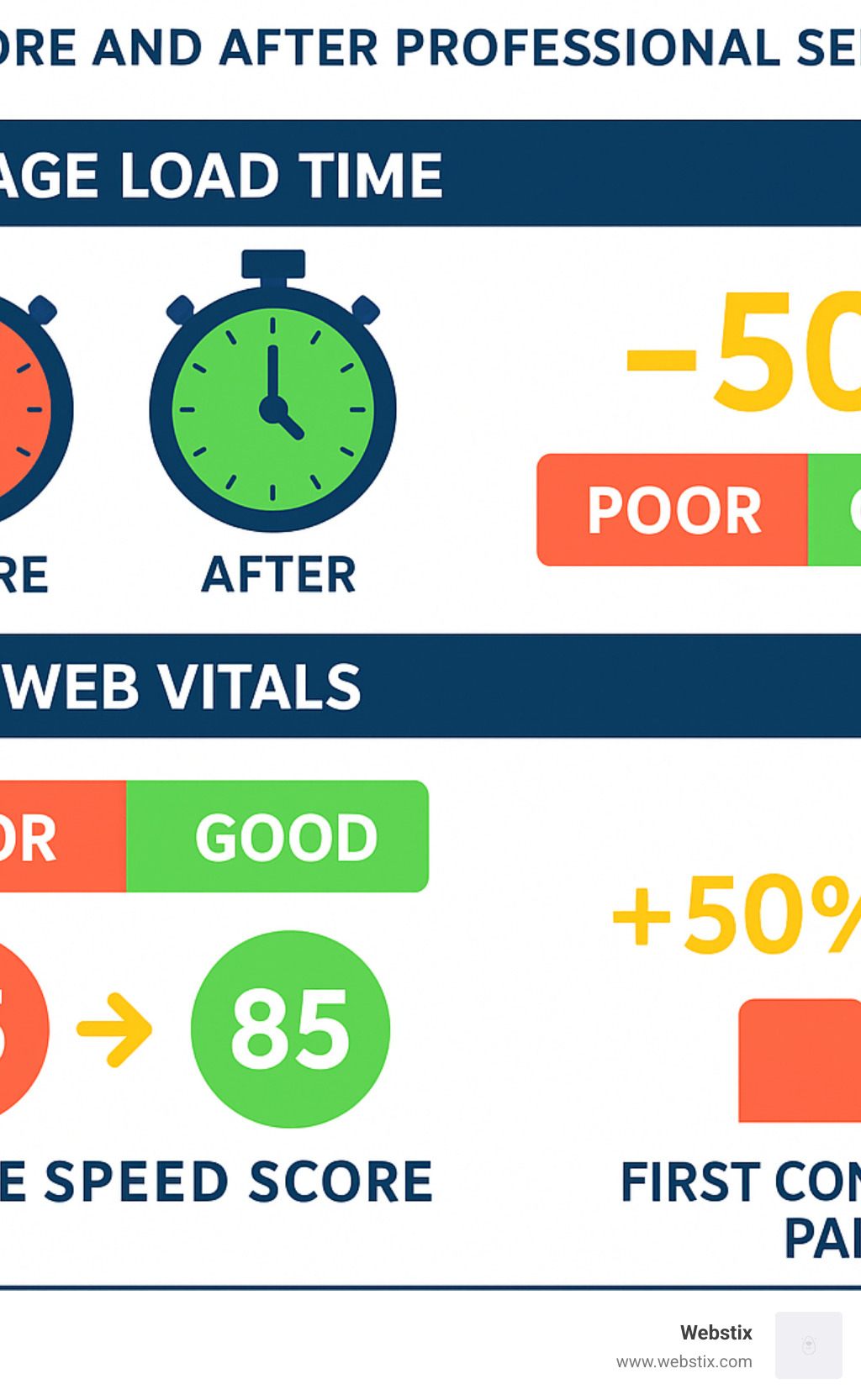
While I can't promise specific numbers (every site is different), I can share what we typically see. Most websites experience load time reductions of 40-60%, with Core Web Vitals improving from "Poor" or "Needs Improvement" to the coveted "Good" status that Google rewards.
Mobile speed scores usually jump by 20-40 points, and First Contentful Paint often improves by 50% or more. We've worked with sites that initially loaded in 5-10 seconds and got them down to 1-2.5 seconds after optimization.
At Webstix, we don't guarantee specific metrics (too many variables are involved), but we do guarantee measurable improvement. If we don't make your site faster, you don't pay - it's that simple.
Absolutely - and in all the right ways! Google has explicitly stated that page speed is a ranking factor, and Core Web Vitals are now officially part of their algorithm.
After implementing a site speed optimization service, our clients typically see improved search rankings (especially for mobile searches), increased organic traffic, and better crawl efficiency (Google can index more of your pages with the same resources). We also see reduced bounce rates and improved user engagement metrics, both of which indirectly benefit your SEO efforts.
While speed optimization isn't a magic solution for all SEO challenges, it removes a significant barrier to better rankings and provides a foundation for your other SEO efforts to build upon. Think of it as clearing the path so your content can shine.
Not necessarily. In our experience, hosting is sometimes a limiting factor for site speed, but not always. During our initial audit, we carefully assess whether your current hosting environment is adequate for optimal performance. If so, we do offer website hosting, but using our hosting is not required.
If we determine that your hosting is constraining your site's potential, we'll recommend alternatives that offer better performance. However, we can often achieve significant improvements even within the limitations of your current hosting through efficient coding, caching strategies, and other optimization techniques.
For clients who do need to upgrade their hosting, we can assist with the entire migration process to ensure a smooth transition with minimal downtime. We've helped dozens of clients through hosting migrations and know how to avoid the common pitfalls.
In today's digital landscape, website speed isn't just a technical detail—it's a business essential that directly impacts how users experience your site, how Google ranks you, and ultimately, your company's revenue. The data tells a compelling story: faster websites consistently lead to higher engagement, better conversion rates, and increased sales.
A professional site speed optimization service does more than just tweak a few settings—it transforms your digital presence from a potential liability into a powerful business asset. At Webstix, we've partnered with businesses across the spectrum—from local Madison shops to national brands—helping them turn frustratingly slow websites into lightning-fast platforms that actually deliver results.
When you choose to work with our team at Webstix, you're getting more than just technical expertise. You're partnering with people who understand that your website is critical to your business success. Here's what that partnership looks like:
We start with a thorough, data-driven approach that identifies exactly what's slowing your site down—no guesswork involved. Then we create solutions custom specifically to your website platform and business needs, because we know that cookie-cutter approaches don't cut it for serious businesses.
Throughout the process, we provide clear, jargon-free reporting that shows you exactly what improvements we've made and how they're impacting your site. We carefully balance technical optimization with maintaining your site's design and functionality—because a fast site that doesn't look or work right isn't really a solution at all.
And when the initial optimization is complete, we're still here to provide ongoing support as your site evolves, ensuring it stays fast as you add content and features over time.
Investing in a site speed optimization service typically pays for itself faster than almost any other digital investment:
Most businesses see conversion rate increases of 8% or more after speed optimization—often within weeks, not months. Bounce rates typically drop by 20-30%, meaning more visitors are actually staying to see what you offer. Search rankings almost always improve, driving more organic traffic without additional ad spend.
The improved user experience creates better brand perception, which has long-lasting effects on customer loyalty. And all of these benefits combine to give you a meaningful competitive advantage in your industry.
For most of our clients, these improvements translate into revenue gains that quickly exceed the cost of our services—often within just a few months.
If you're ready to stop losing customers to a slow website, here's how to get started with Webstix:
With offices throughout Wisconsin, Michigan, Indiana, and Illinois, Webstix combines local understanding with national-level capabilities. Our team genuinely understands the unique challenges facing Midwest businesses, and we're committed to delivering practical solutions that drive real, measurable results.
Don't let a slow website continue to hold your business back. Your customers expect better, and so should you. Contact Webstix today to find how our site speed optimization service can transform your online presence and boost your bottom line.